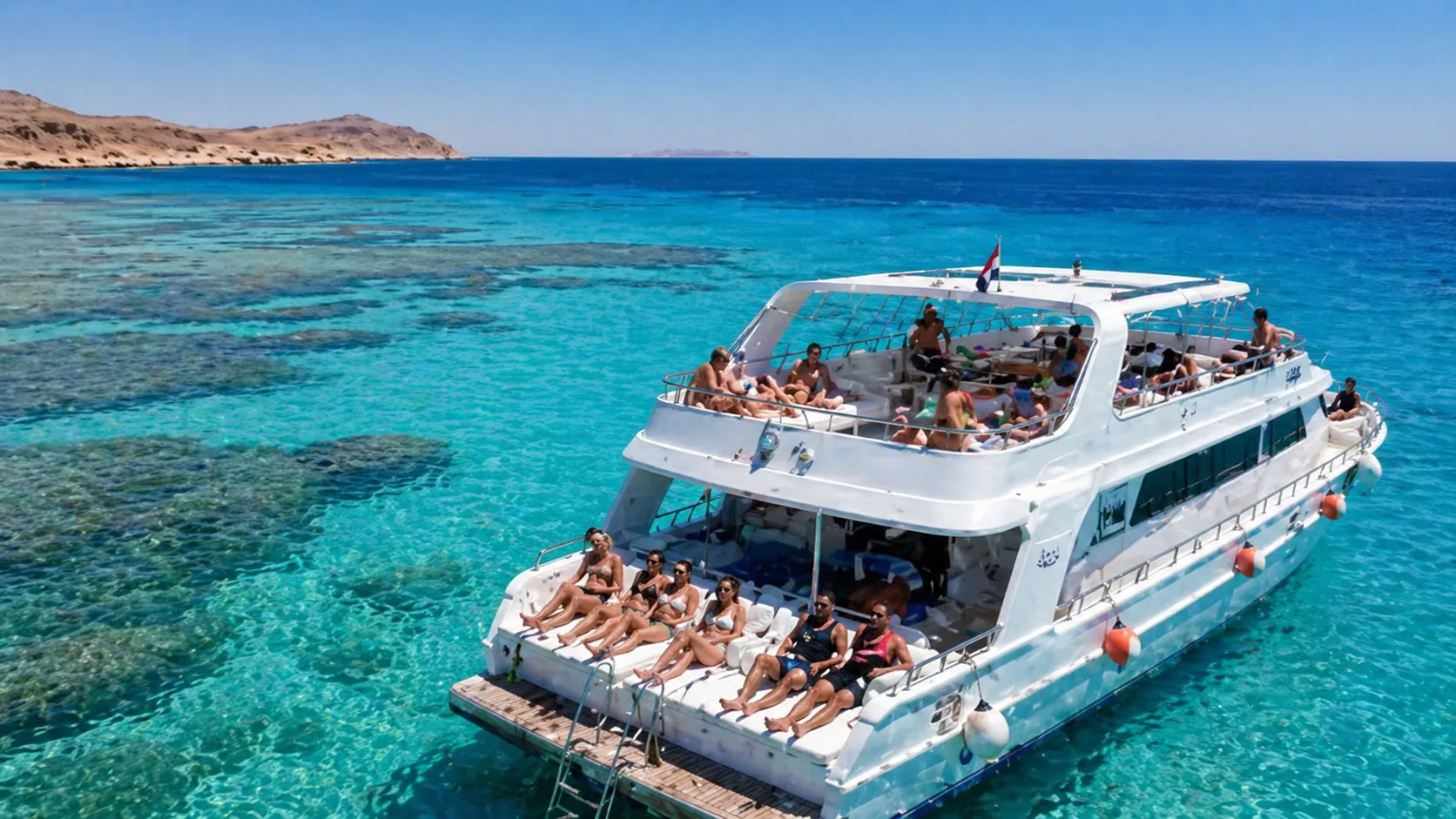
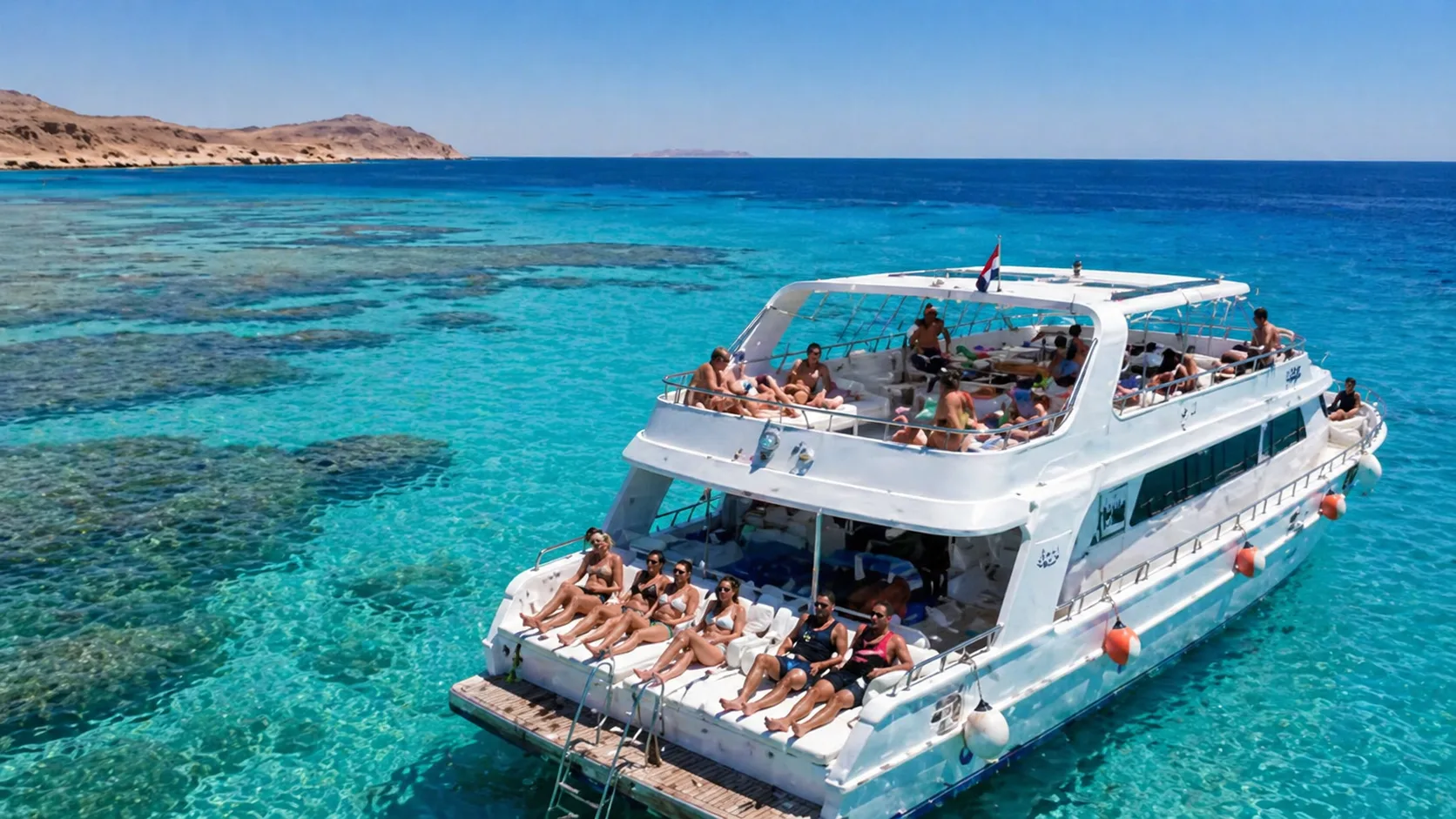
Hurghada sits on the western shore of the Red Sea and is the most popular base for snorkeling day trips in Egypt. The water averages 24–28°C year-round, visibility regularly tops 25 metres, and a fringe of healthy coral reefs surrounds offshore islands like Giftun, Magawish and Abu Ramada. This guide walks you through everything we wish first-timers knew before booking, what to see, when to go, how to pick a trip, and which mistakes to skip.
The 5 best snorkeling spots in Hurghada
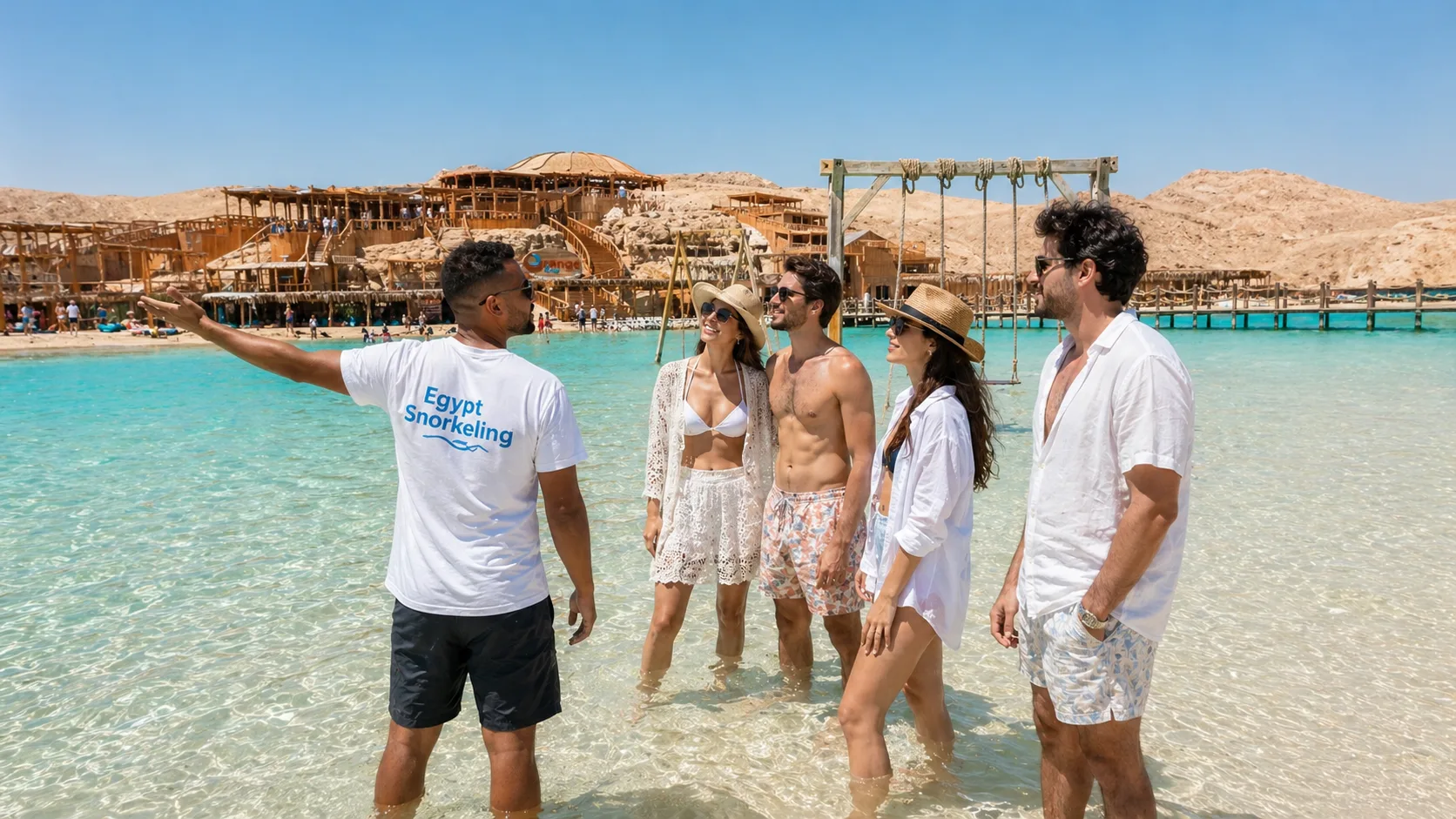
1. Orange Bay & Giftun Island
Orange Bay is the iconic shallow lagoon on the back of Giftun Island, pearl-white sand bar, turquoise water and a tiny seafloor garden that's a perfect first snorkel. From there most boats move to deeper reefs around the island where you'll find butterflyfish, parrotfish, blue-spotted rays and the occasional small reef shark. Best for: families, first-time snorkelers, big-boat day trips.
Orange Bay Island & Snorkeling, Hurghada
Sail to the Maldives of the Red Sea, pearl-white sand, turquoise water and three reef stops.
From €302. Dolphin House (Shaab El Erg)
A horseshoe-shaped reef about 90 minutes north of Hurghada that hosts a resident pod of bottlenose dolphins. Approached ethically (no chasing, no engines near the pod, swim from the side), encounters here are calm and intimate, dolphins often come to investigate the boat themselves. The reef itself has three snorkel stops, all kid-friendly.
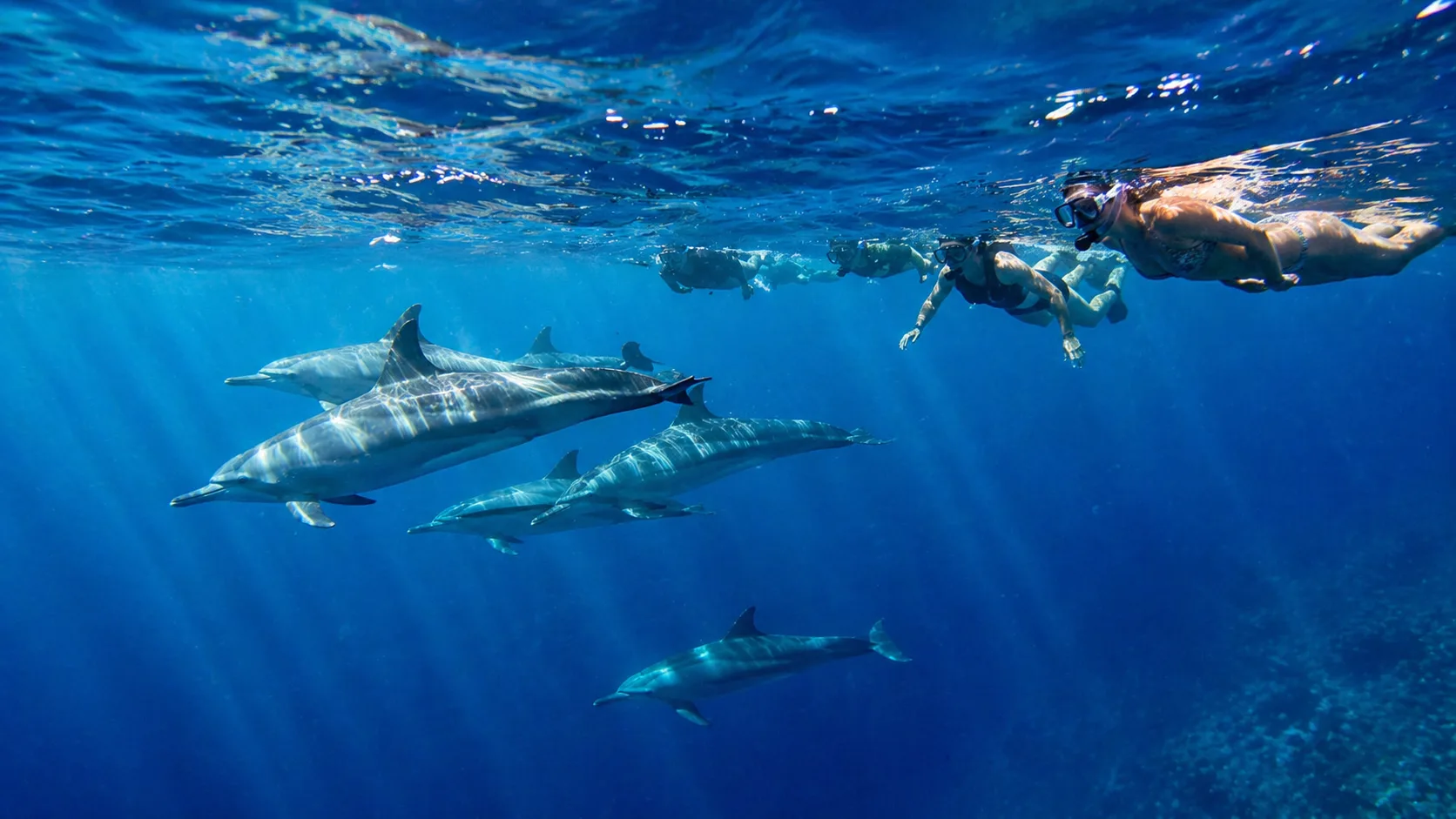
Dolphin House, Swim with Wild Dolphins, Hurghada
A protected horseshoe lagoon home to a resident pod of bottlenose dolphins. Three snorkeling stops.
From €203. Magawish Island
A small, calm island close to Hurghada with very shallow reef plateaus, ideal for kids and nervous swimmers. The reef around the northern point usually has the best fish density.
4. Abu Ramada
Two islets surrounded by deeper, more dramatic reef walls. Often combined with Giftun for a longer day. The reef walls drop steeply, making it visually stunning even from the surface.
5. Hula Hula Sandbar (Private trips)
A remote, instagram-famous sand bar reachable only by speedboat or private charter, about 2 hours north. The surrounding reef is pristine and crowd-free. This is a splurge, book a private boat for the full experience.
When to go: month-by-month
Hurghada is a year-round destination, but the experience changes month to month. Here's a quick breakdown:
- March–May: Best overall, calm sea, water at 23–25°C, fewer crowds.
- June–August: Hot air (38°C+) but water is warm (28°C) and visibility is incredible.
- September–November: Local favourite. Warm water lasts, summer crowds gone.
- December–February: Windier with chop. Water drops to 22°C, wetsuit recommended.
Big boat vs speedboat vs private, how to choose
Three formats dominate Hurghada snorkeling. The right one depends on your group, budget and how much time you want at the reefs:
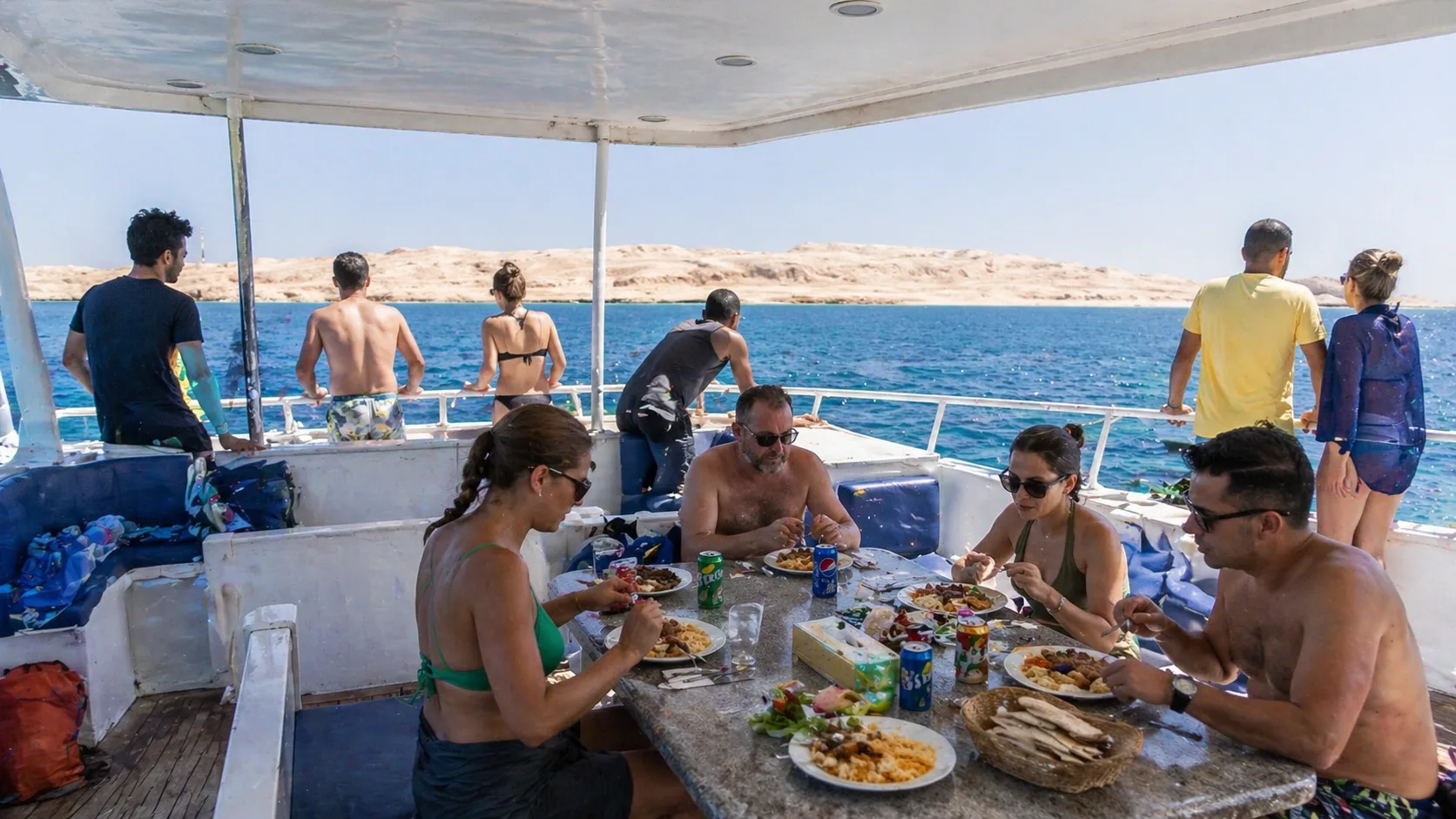
- Big group boat ($30–45/person): Cheapest, most social. 25–35 passengers. Slower transit so less actual reef time but full lunch and a relaxed day.
- Speedboat ($60–85/person): 8–12 passengers, reaches reefs in half the time, more flexible itinerary. Best value for money.
- Private boat ($350–900/group): Just you and your group. You choose where, when, how long. Worth it for families of 4+ or special occasions.
What to bring
- Reef-safe sunscreen (oxybenzone-free, protects the coral)
- Rash guard or long-sleeve UV shirt (your back will thank you)
- Your own mask if you have one, fit matters more than gear quality
- Underwater camera or GoPro with a wrist tether
- Cash for tips (10–15% is standard for crew)
Common mistakes to avoid
- Booking the cheapest beach-front offer without checking the boat. Look at how many passengers, how long, and whether lunch is included.
- Skipping the rashguard. The Egyptian sun is brutal from above and reflects off the water, most sunburn happens during snorkeling.
- Touching coral or chasing fish. Both are illegal in Egyptian protected areas and damage the reef.
- Booking 'dolphin swim' tours from random beach hawkers. Use operators who follow the no-chase rules at Shaab El Erg.
Ready to book?
We run small-group and private trips to every spot mentioned above. Pay on arrival, free 24h cancellation, and an English-Arabic-German-French-Russian crew that genuinely knows these reefs.